Work / Identity / Bristol
Croft Yard
Identity and a one-page pitch for a food hall proposed for the Carriageworks in Stokes Croft.
ScopeIdentity, a one-page pitch and an enquiry route.
ConstraintThe hall is proposed, not open, so the page has to sell a room that doesn’t exist yet.
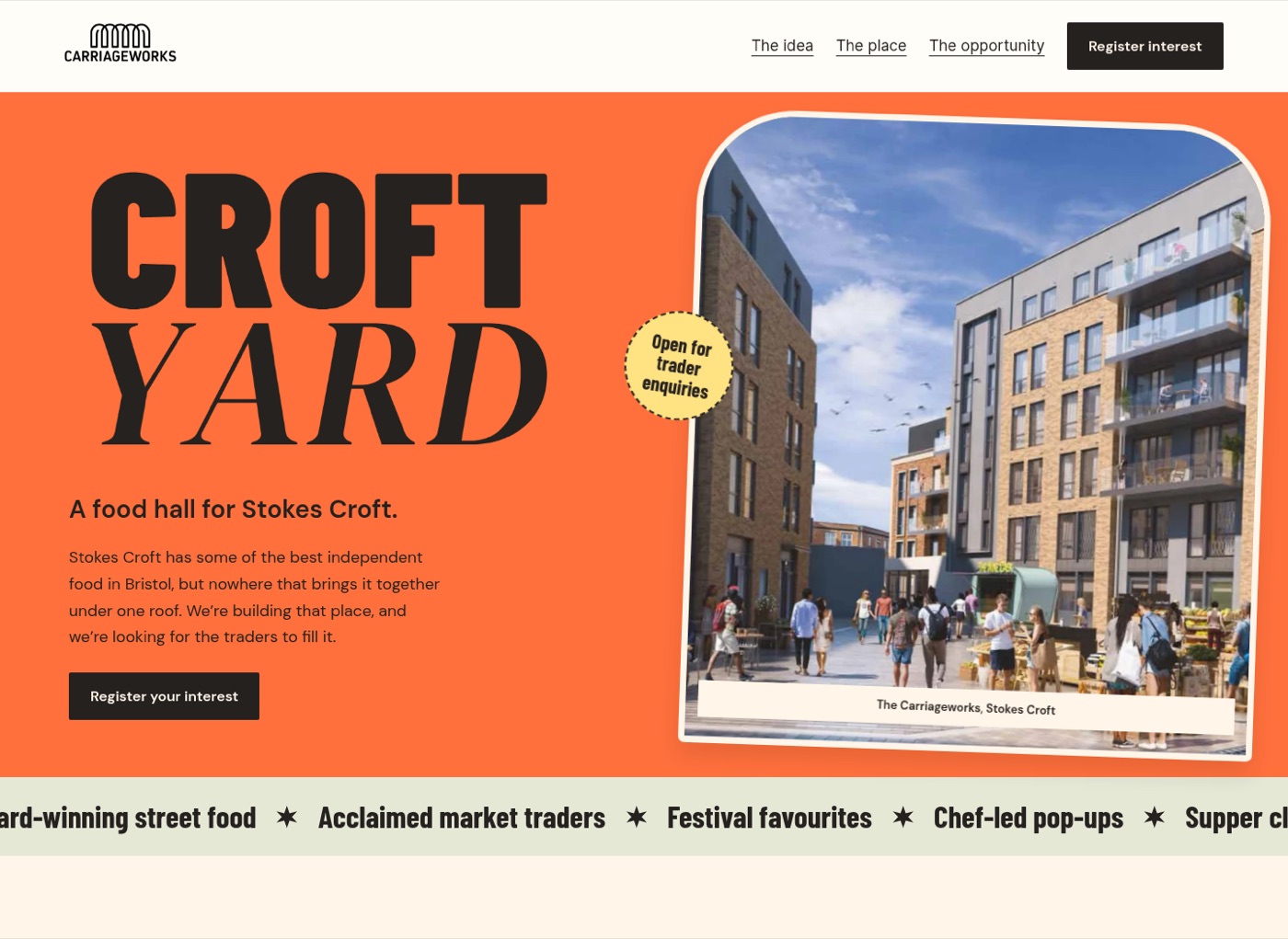
Croft Yard is a food hall proposed for the Carriageworks in Stokes Croft, on a site that has been in use since 1862. The people behind it need traders — cooks, bakers, coffee people. The page they had explained the idea well enough, but gave a prospective trader nothing to hold on to: no identity, and no obvious way from “this sounds interesting” to “here are my details”.
So we made one page with one direction through it, built around a wordmark the project could use everywhere, and made registering interest the obvious last thing on it. It went into the site that was already there, so nothing else moved.
A pitch to traders, not a brochure
Only one visitor matters here: someone who might take a unit. So the page runs one way — the idea, the place, the opportunity, then the form — and the client’s own copy does the persuading. The generic slogans went, along with the paragraph explaining what a trader is. “Register now. Help shape the hall” moved below the form, where someone who has just filled it in will actually see it.
Under the hero, a ticker scrolls the trader categories the project is looking for: street food, festival favourites, supper clubs, chef-led pop-ups. A cook can tell in two seconds whether there is a place for them here. It pauses under the pointer, and stops altogether for anyone who has asked for less motion.
- Brand identity
- Page design
- Build
- Enquiry route
The place, without pretending it exists yet
A trader needs to picture the room, and needs to be sure they are not being sold something imaginary. Photographs of the Carriageworks façade and courtyard sit in their own panel, unmistakably the real building. What follows is a compact board of food halls elsewhere — every tile captioned and credited — with the courtyard concept labelled as an illustration.
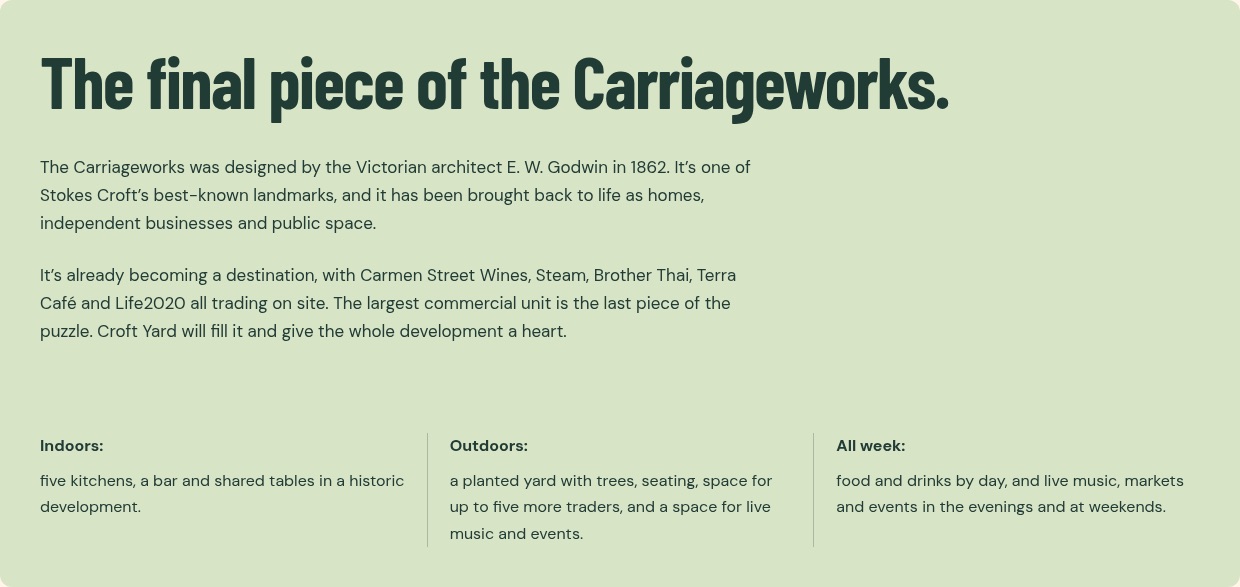
Under the heritage copy the proposition is stated in three columns — indoors, outdoors, all week — which is what a trader is being asked to imagine.
Getting the enquiry out of the inbox
The form asks a fair few things, but the one that earns its place is a simple 1–5 score: how likely a trader would be to take a spot if the terms were right. Beside a start window and a note of kitchen needs, the answers arrive as a list the team can sort and compare, instead of a pile of emails to re-read.
Consent is its own tick, not bundled in with the newsletter, and nothing is asked twice or hidden behind a second page. That is the difference between a trader finishing the form and a trader meaning to finish it later.
A project that has not opened yet can talk to traders as if it means business, and the team can answer a hundred enquiries from one list.
Client
Croft Yard, a proposed food hall for the Carriageworks, Stokes Croft, Bristol
What we did
Identity, page design and build, enquiry route
Built with
WordPress, with answers landing in a shared sheet
The reference board is other people’s work: third-party venue photographs, credited tile by tile, and one concept image labelled as a concept.
Tell us what you’re making.
We’ll have a look first. Send a few lines: what the project is, what isn’t working, and anything you already have.