Work / Art / Portfolio
June Collier
A portfolio and archive for an artist, built around the whole body of work.
ScopeA browsable portfolio, collections, and an editor June can run herself.
ConstraintThe work is a life’s archive, so trimming it to recent work would have thrown most of it away.
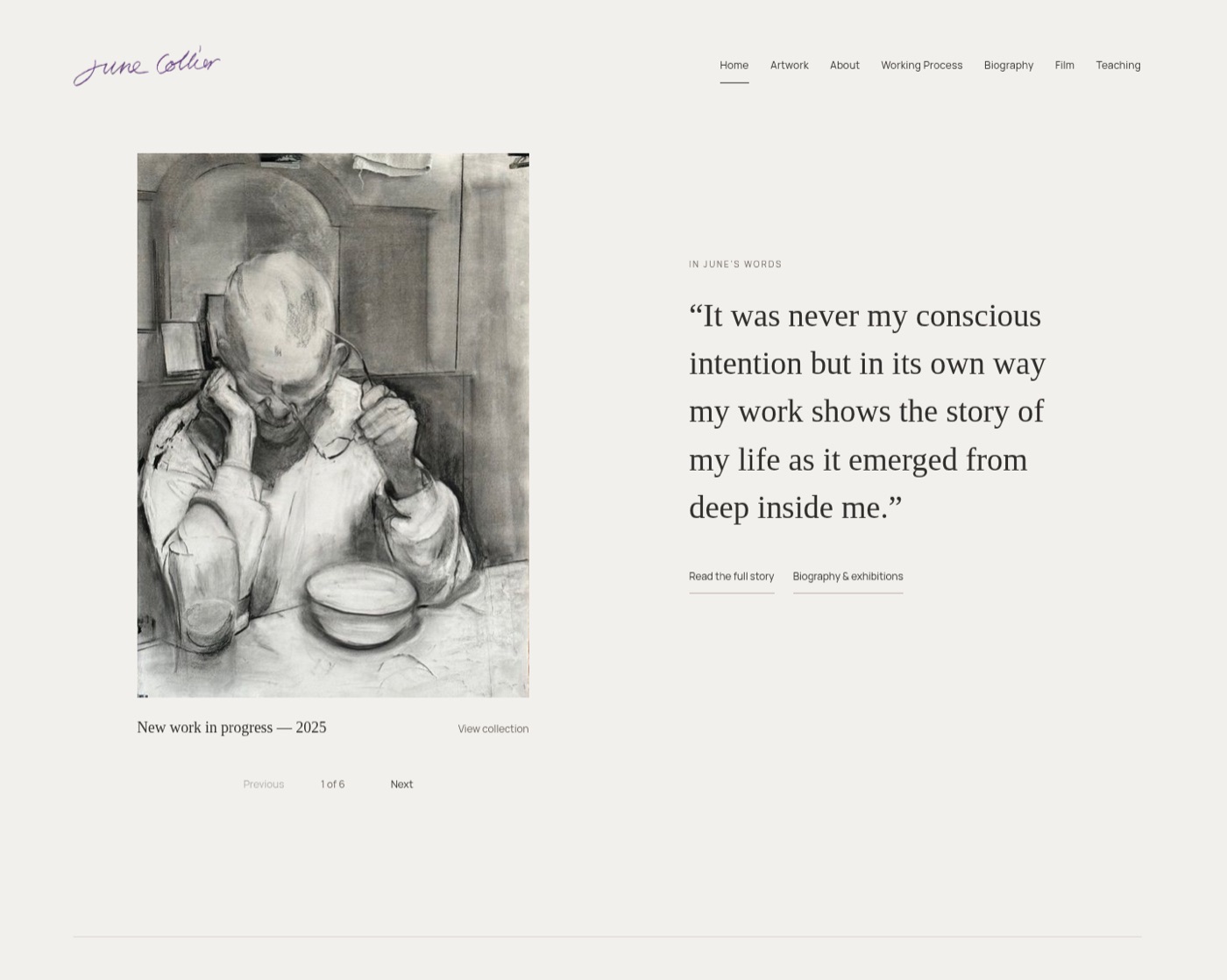
June asked for a website that looked better on her phone. The advice she had been given was to keep it minimal, show only recent work, and leave the story out. But the work is a life’s archive: collections, working-process sequences, decades of teaching, and photographs of all of it. Trimming it to recent work would have thrown most of that away.
So we went the other way, and then made the other way practical: a homepage you browse at your own pace, an archive kept rather than trimmed, and an editor organised around what an artist actually does.
A gallery you drive
Six agreed works, one at a time, with Previous, Next, a counter, swiping, dragging and keyboard control. No autoplay. If you are standing in front of a painting, a timer is the last thing you want, and bouncing hints would not suit the room either. On a phone the quotation drops below the artwork, so the first thing on screen is the work.
The identity is June’s, not ours: her existing signature, optically aligned, on a warm paper ground, with “June” lifted out of it for the favicon. Nothing was redrawn.
- Design direction
- Information architecture
- Archive migration
- Front-end and CMS build
Keeping the archive, and the paintings whole
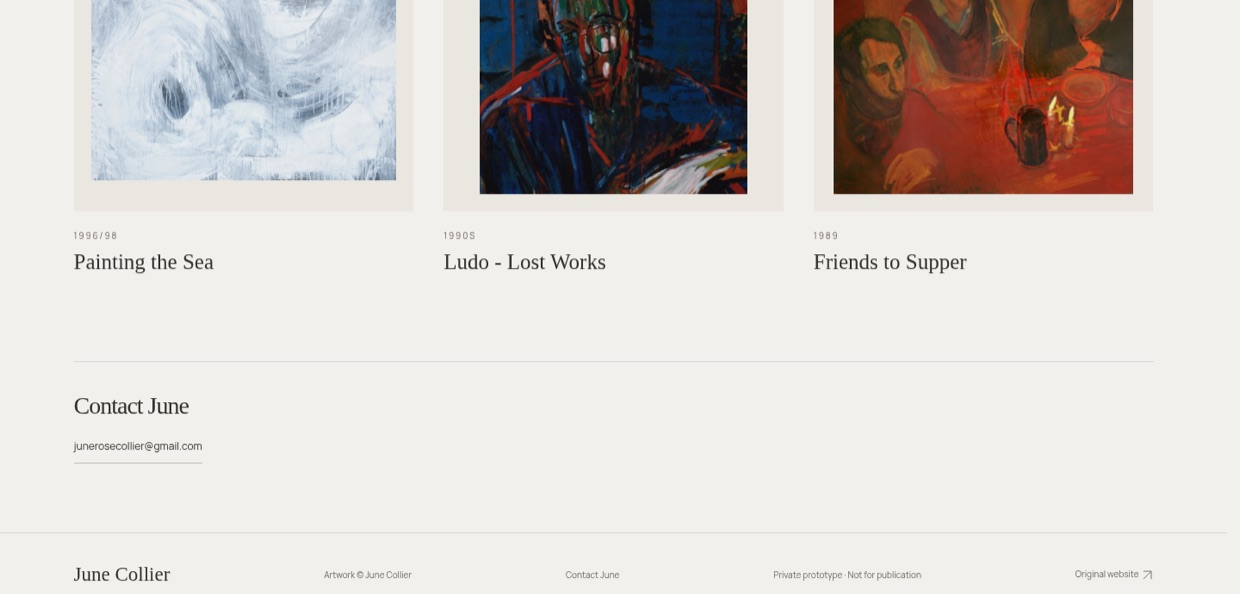
The migration kept everything that was there: every collection, every working-process sequence, every artwork and image record, with duplicates resolved rather than discarded. Those are records, not finished works, and no missing metadata was invented to fill the gaps.
Painting the Sea V is cropped to sit in the homepage portrait frame, but the crop is a display decision that reverses: the full painting is what opens when you enlarge it, and the original stays untouched in the archive. Text that had been uploaded as an image was transcribed once into the collection page, and two text-card records were hidden rather than deleted, with their sources and installation photographs kept.
Pictures with their own rhythm
Biography used to line photographs up against events, which opened gaps in the timeline and shoved the reading around. The timeline is continuous now and the photographs keep their own spacing down a second column, with a small childhood self-portrait — a painting made in 2008 — at the top rather than at the date it depicts.
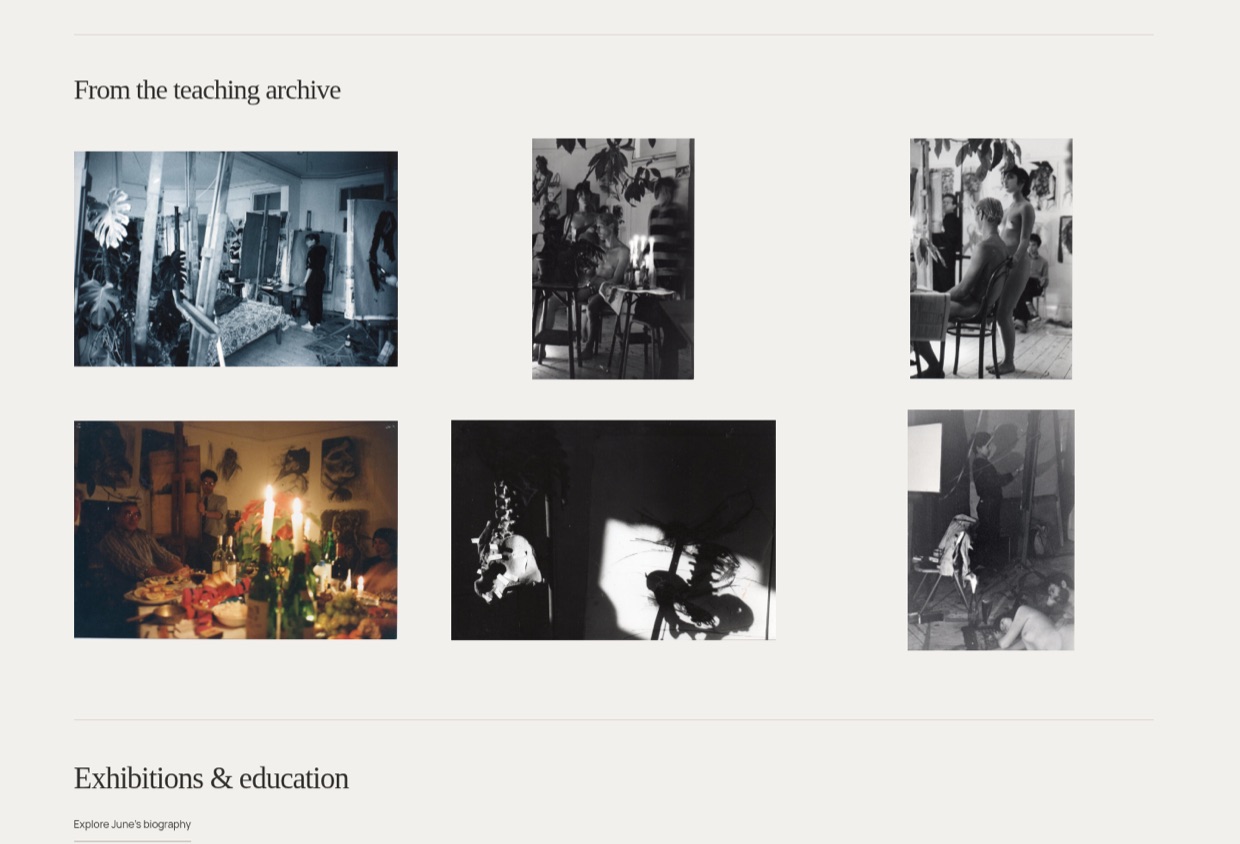
Teaching had the opposite problem: a long column of images after the text, each one a trip to another page and a press of Back. It is three staggered photographs and a six-image grid now, and any of them opens a nine-image viewer where it stands — swiping, arrows, a counter, and a close that puts you back exactly where you were.
An editor that keeps up
An artwork is one record with optional collection membership, so a picture uploaded now does not have to be uploaded again when it finds a collection later. Collections hold covers, order and hidden items; artwork can be browsed by collection or by newest addition; a standalone work keeps its address when it is added to a collection. The editing menu shows Artwork, Collections and Homepage, with the occasional editorial pages tucked under Other pages.
Moving between pages took about three seconds, and the header shifted while the font loaded. Both came down to the same thing: the shared styles, scripts and fonts were being fetched again on every page. Once the browser was allowed to keep them, it stopped asking after the first page, and the font came down by about two thirds with the letterforms checked to be sure nothing shifted. Fixed navigation slots and a stable scrollbar gutter stopped the sideways twitch.
The work is browsable at the speed it was made, and she can add to it herself without a developer, a manual, or having to decide in advance where a piece belongs.
Client
June Collier, artist
What we did
Design direction, information architecture, archive migration, front-end and CMS build
Built with
Astro, TypeScript and Sanity
Artwork, photographs and writing belong to June.
Tell us what you’re making.
We’ll have a look first. Send a few lines: what the project is, what isn’t working, and anything you already have.